Landscape Models & Service Design
As the project made progress, the scope grew as well. I had the opportunity to hire a team, over time. I also inherited the paid analytics platform. The product teams aligned along user archetypes, and my team was responsible for the Pharmacy Admin role experience which included the operations, analytics and cabinet (robot) experience. At this point we were a team of six supporting 22+ scrum teams. The increased scope provided me a unique opportunity to impact the unified multi-modal experience for this role. In this scenario at Omnicell, we adhered to Gestalt principles by ensuring that all the pieces of the design were connected in a meaningful way. By applying the concept of ‘continuity,’ we aimed to create a seamless and intuitive user experience, where users could easily perceive the system as a unified whole rather than a disjointed collection of parts.
Understanding the entire system from start to finish was crucial to streamline the overall experience.
Collaborating closely with my UX team, we delved deep into each feature, creating customer-focused vision/value statements. Partnering with Product Leaders, we aligned on a cohesive product strategy, integrating problem spaces and reducing conflicts. I also decided to invest heavily into ethnographic research. The entire team had the opportunity to shadow pharmacy admins, pharmacists and pharm techs.
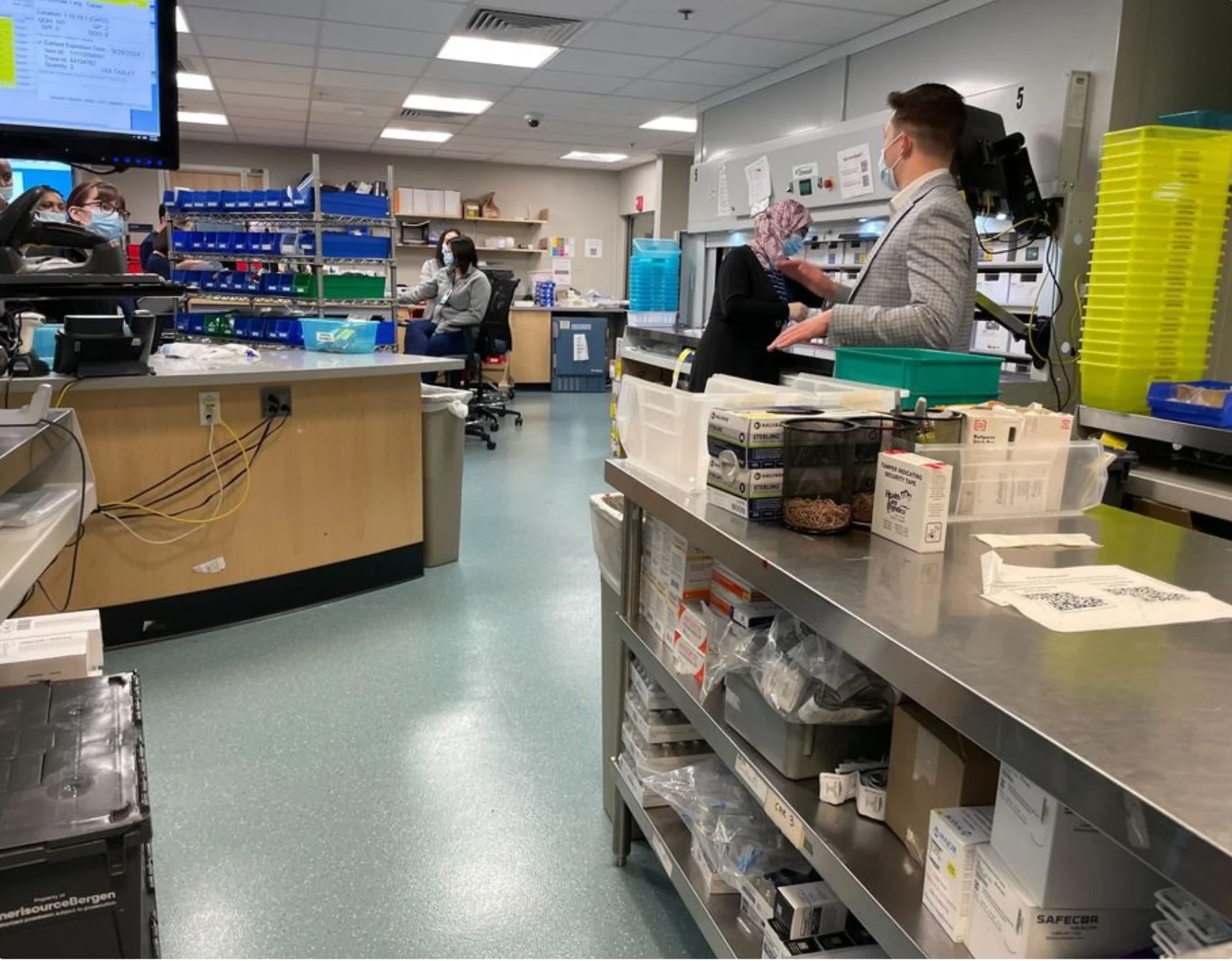
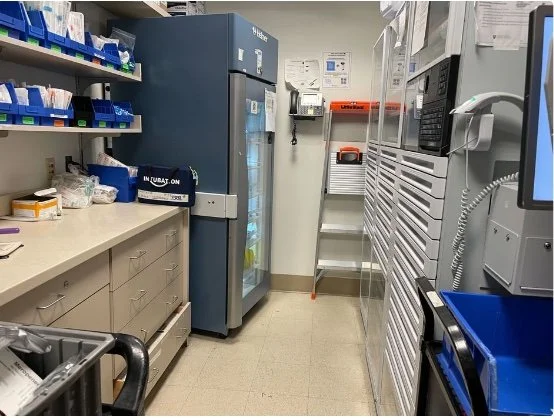
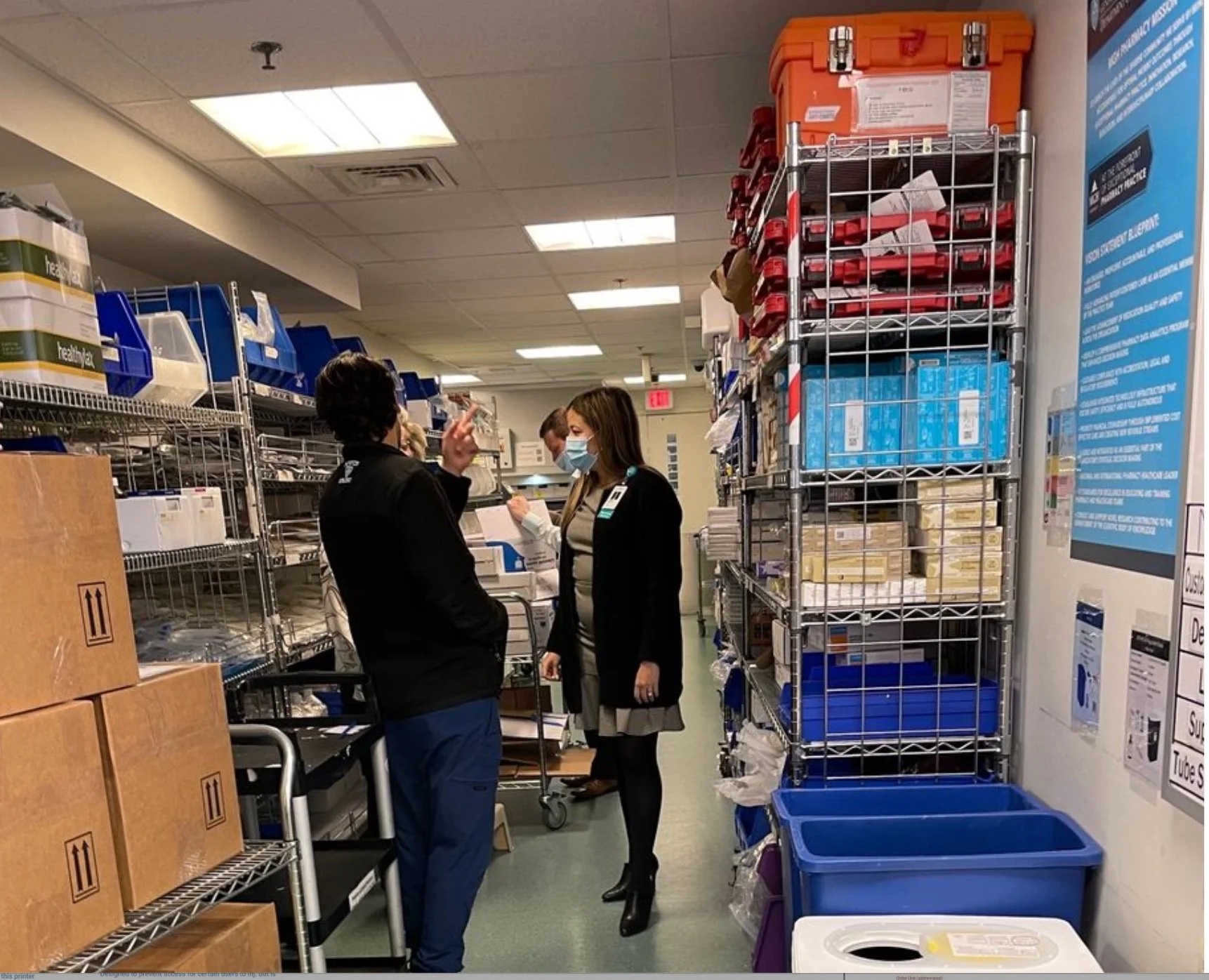
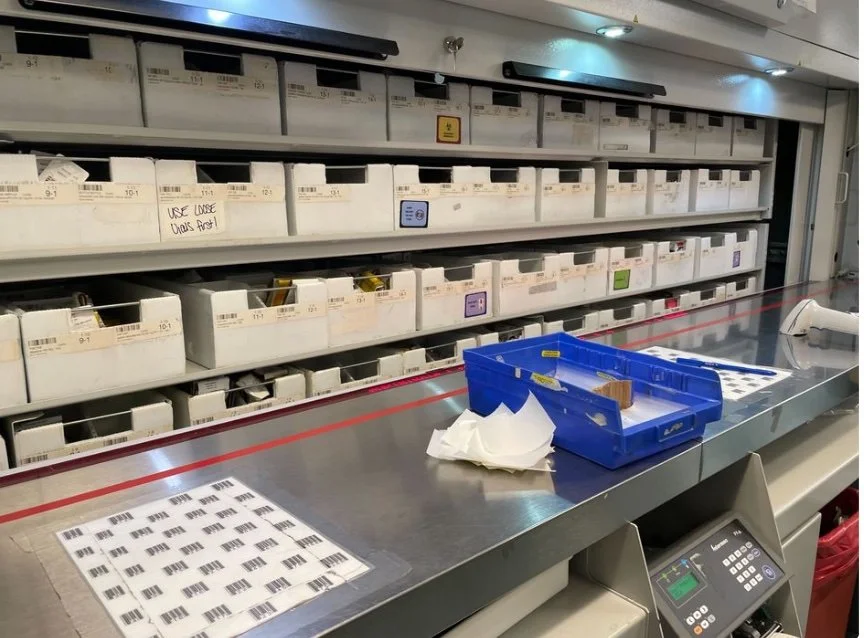
Collaborating closely with my UX team, we delved deep into each feature, creating customer-focused value statements. Partnering with Product Leaders, we aligned on a cohesive product strategy, integrating problem spaces and reducing conflicts. We decided to extend the paid product line from the baseline, maintaining consistent design and interactions but with nuanced analytics. With the entire product and engineering team, we defined success for each feature. I created a visual model to illustrate the unified platform experience, highlighting the high-level value proposition and feature flow. Color coding differentiated base essentials from paid analytics features, aiding clarity and alignment. I needed all parties to sign off on this vision including leadership & stakeholders. This model helped bring teams together on a unified vision.
Here are the findings from my experience at several large hospital systems
Restock Route Observation: I shadowed an experienced Pharmacy Technician, on standard restock route within the ICU's stock area. Familiar with the Omnicell system, the technician expressed a desire for visual tool to better stock medications.
Item Edit: The process of editing stocking lists and restock management involved 5-12 steps and was laborious. We needed to allow quick item edits while maintaining safety standards.
Inventory Management: Legacy system had a single interface to manage item editing and inventory. We needed to separated Inventory Management into its own space and added $ savings opportunities as a paid feature.
Discrepancy Management: During my shadowing session within pharmacy, I ran across an instance where pharmacy team was trying to resolve a discrepancy. The environment was stressful since it was a significant amount of controlled substance missing. There was some detective work done by tech. We needed to improve discrepancy management.
To align the entire UX and Product team on feature prioritization, I developed a high-level UX Strategy for the platform. This strategy served as a benchmark for analyzing our work, ensuring we were making progress in the right direction. In organizations where UX is expanding its influence, it's beneficial to keep the strategy simple and easy to adhere to.
Within the new unified product space, the strategy was simple:
Bridge the Gaps: Connect the dots for our users. Do not make them think.
Cohesive Experience: Keep the experience consistent irrespective of devices across all platforms. This included aligning micro-interactions, table hierarchy, cleaner organization of data heavy pages and standard page templates which we added to the design system.
Value-Based Customer Journeys: Stop counting the number of clicks and focus on every step of the process adding value to the customer experience – for example, reducing cognitive load, increasing clarity, showing supporting data and such. (We had teams wanting all content on one screen to reduce clicks)
The teams aligned based on user archetypes. The team I was leading, was tasked with the Pharmacy Admin archetype, our largest user group. We focused on products tailored to the specific persona. However, I observed that teams dealing with other archetypes were utilizing systems and workflows that lacked alignment. In smaller health systems where a single individual managed all roles, this misalignment could cause confusion. Recognizing the importance of delivering a unified experience for our customers, I worked collaboratively with my peers to establish a consistent system across all personas.
Together, we differentiated and outlined the journey of an item or medication within the autonomous pharmacy space, ensuring coherence across all features & personas. We then aligned on language, breakdown of features and multi-modal interactions. I led the workshop and designed this system map.
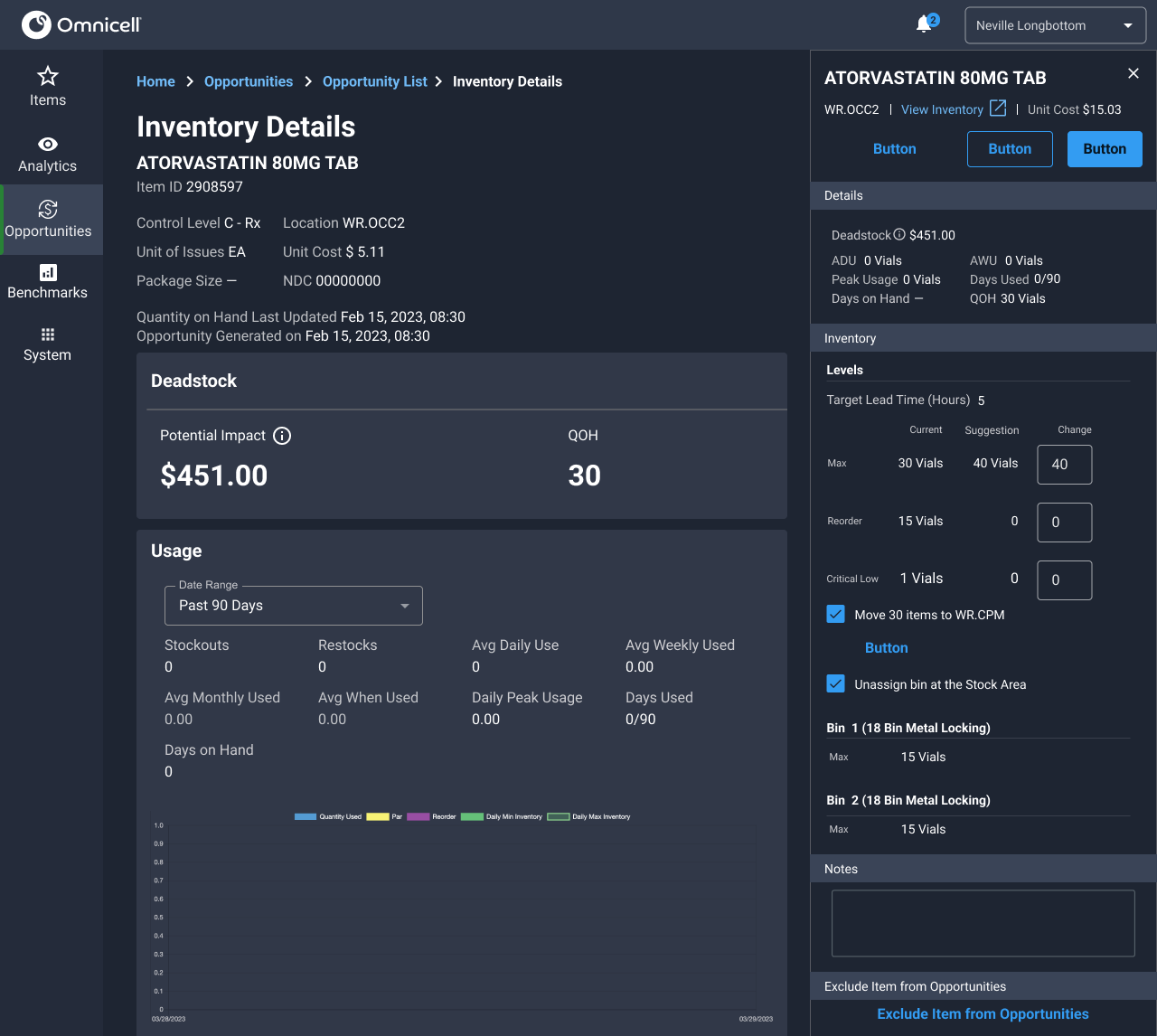
While my team was working with product managers on specific products, I collaborated with marketing intelligence and content strategy team to create general language guidelines. We standardized the nomenclature across all products, teams tended to refer to information differently on multiple products. I unified the table experience, creating standard hierarchy of information within each context. I worked across multiple teams to ensure they were using common components for similar actions, such as this side panel to manage inventory levels. Together, as a team we worked on improving the system, delivering standard solutions, driving development efficiency and improving user experience.
I was tasked with streamlining the Omnicell Cabinets/ Robots features and tie the multi-functional team into a single vision. I built a model to see how all the features come together and manage user engagement across the lifecycle of these cabinets.
This helped the different product managers understand the dependencies, the cabinet visualization views that would be tied into each of these features and the users we would need to engage with to understand the features better.
The efforts to unify teams, align underlying services, and ensure consistent deliverables across all departments have led to significant improvements in user experience and operational efficiency. Although these results are not immediately quantifiable, the countless hours dedicated to aligning products and deliverables have fostered better communication with engineering teams and clarified feature development for the product team.