
Medication Management: Deep Dive
Medication management systems enable hospitals to precisely control their inventory, set rules for stocking and dispensing, and optimize stock levels effectively.
The Story: When I joined Omnicell, the engineering teams were awaiting a UX lead to assist with transitioning the medication management system to a cloud-based platform. Faced with a steep learning curve as the sole designer, I quickly dove into the dual challenges of delivering initial designs and developing a comprehensive roadmap and design team. I started by establishing a foundational design system, utilizing material components, patterns, and icons, and worked closely with the front-end teams to enhance the product’s visual appeal. To expedite the development process, I provided wireframes that addressed immediate blocks. Simultaneously, I conducted user studies with our existing customer base to gauge general sentiments, task efficiency, and user needs. The feedback from these sessions was instrumental in identifying immediate quick fixes and more complex, long-term challenges. Collaborating with the business intelligence team, I prioritized features that would deliver the most significant impact, aligning our design efforts with strategic business goals.
Project Goal: Develop an efficient and user-friendly medication management system. This system will maintain feature parity with the existing legacy product with enhanced functionality and user experience.
Role: Senior Designer/ Manager
Team: Started as sole designer and build out a team of 5 designers. (The project scope grew as well)
What worked: A phenomenal engineering, product & UX partnership. Leadership that was open to data and research findings.
Limitations: Design System – while my team and I supported the design system development, we did not have the bandwidth to expand the design language into light mode. We inherited the dark palette, and needed to use it for consistency across the platform.
The Beginning
I started by diving into the existing legacy product. Visually the product had a lot of scope for improvement. However, this product was the foundation for the entire autonomous pharmacy vision at the organization and I wanted to understand the fundamental system.
Visual Transformation
Every item – medication & supplies, within the medication management system was characterized by a staggering 147 distinct attributes or more, dictating the behavior and rules applicable to the item at a particular location. With this level of complexity assessing the need for each attribute, collecting usage data, and organizing these attributes into optimal groupings within a short timeframe was challenging. I decided to focus on fixing the page flows, to make the content easy to read. I implemented a well known material design system, since users were familiar with component behavior. Starting with grouping content into tabs, creating clear hierarchy of information, defining distinct ‘view’ and ‘edit’ modes (different access levels), and streamlining the navigation for shorter journeys. This immediately helped usability and findability of attributes, and garnered trust & support from the team & beta testers.
The Invisible Work
While the Engineering team was building the new page templates, I had the bandwidth research the problem space. After meeting with SMEs and stakeholders, I realized that although the UX improvements did not have direct incentives due to the product being offered for free these enhancements were crucial. They supported key functionalities such as diversion management and shortage tracking, adding substantial value to our core services. I worked with Engineering to get daily touch point data. I collected the usernames for 5 large hospital systems, and identified their roles. I then collaborated with my product manager to conduct online workshops and understand the underlying systems within hospitals.
I then built out a value model that tied better experience to reduction in time for pharmacy staff, and increased patient safety. Several meetings later, I got resources a team and build a redesign road map.
Feature List & Prioritization
I collaborated with the Product Manager to recruit for virtual workshops with several large health systems. These workshops helped us understand the critical fixes needed, and build a prioritized feature list. I created a confluence template to document the research studies and outcomes. This helped us communicate the research findings to cross-functional teams.
The UX Solutions
-
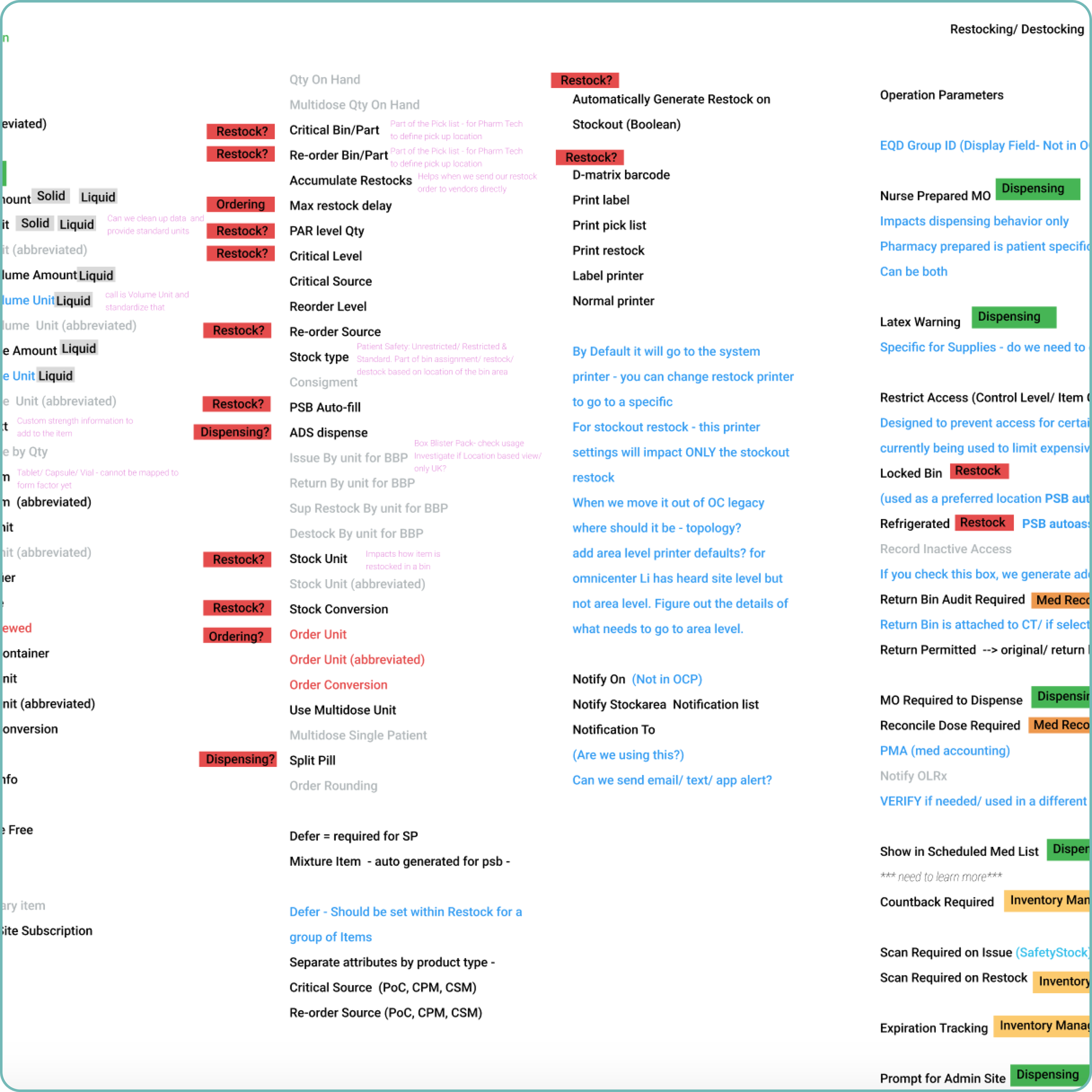
Item Attribute Grouping
Every medication had a staggering 147 attributes that would help define the item behavior at location. This project solves the findability problem, where were moved based on usage data, the attributes that were not being used and grouped them into pharmacy tasks.
-
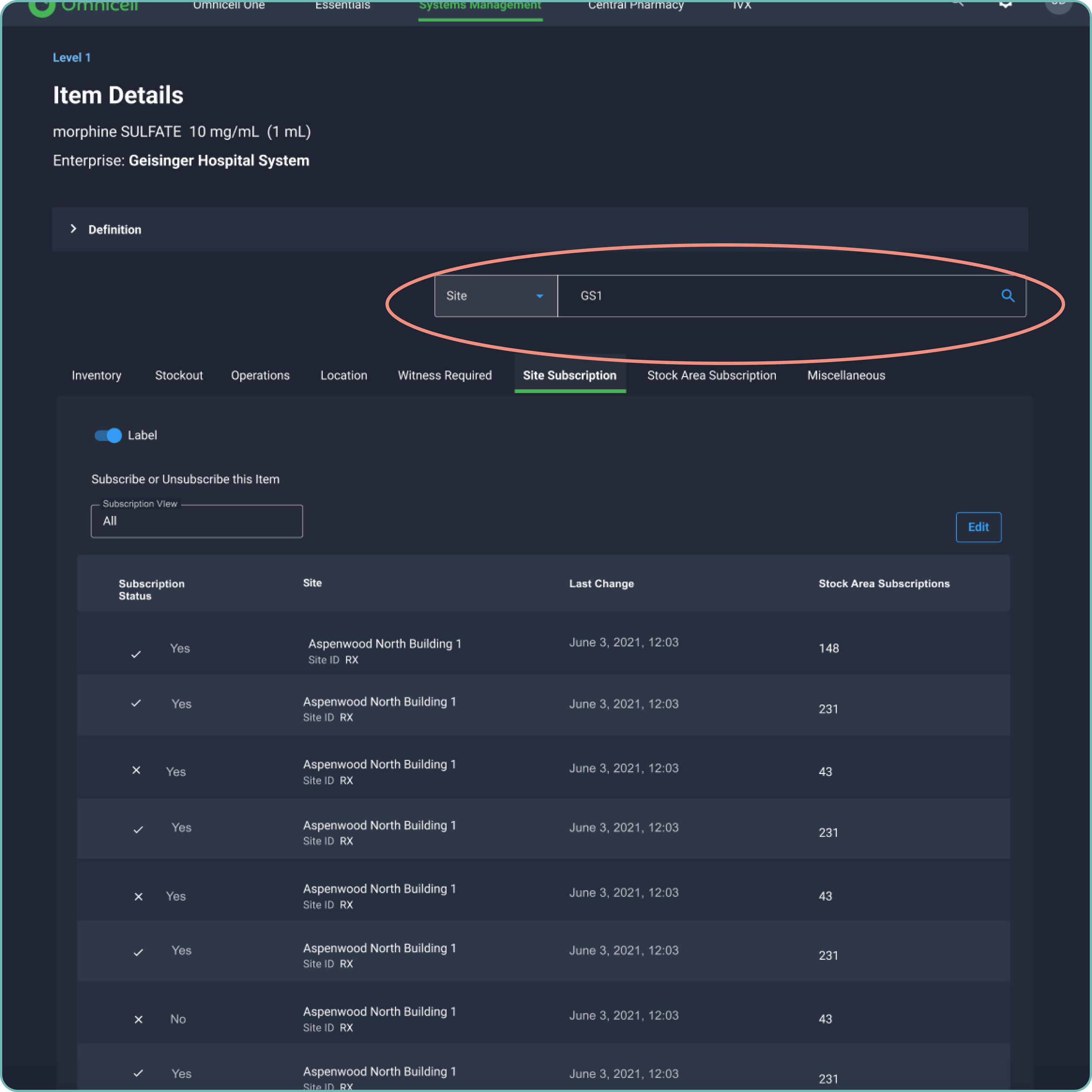
The Three List Problem
Healthsystems had to navigate threseparate lists to mange an item, since the item ttributes would vary based on location. This project shows the process of identifying the problem and finding a simple effective solutios to integrate the three liss into one
-
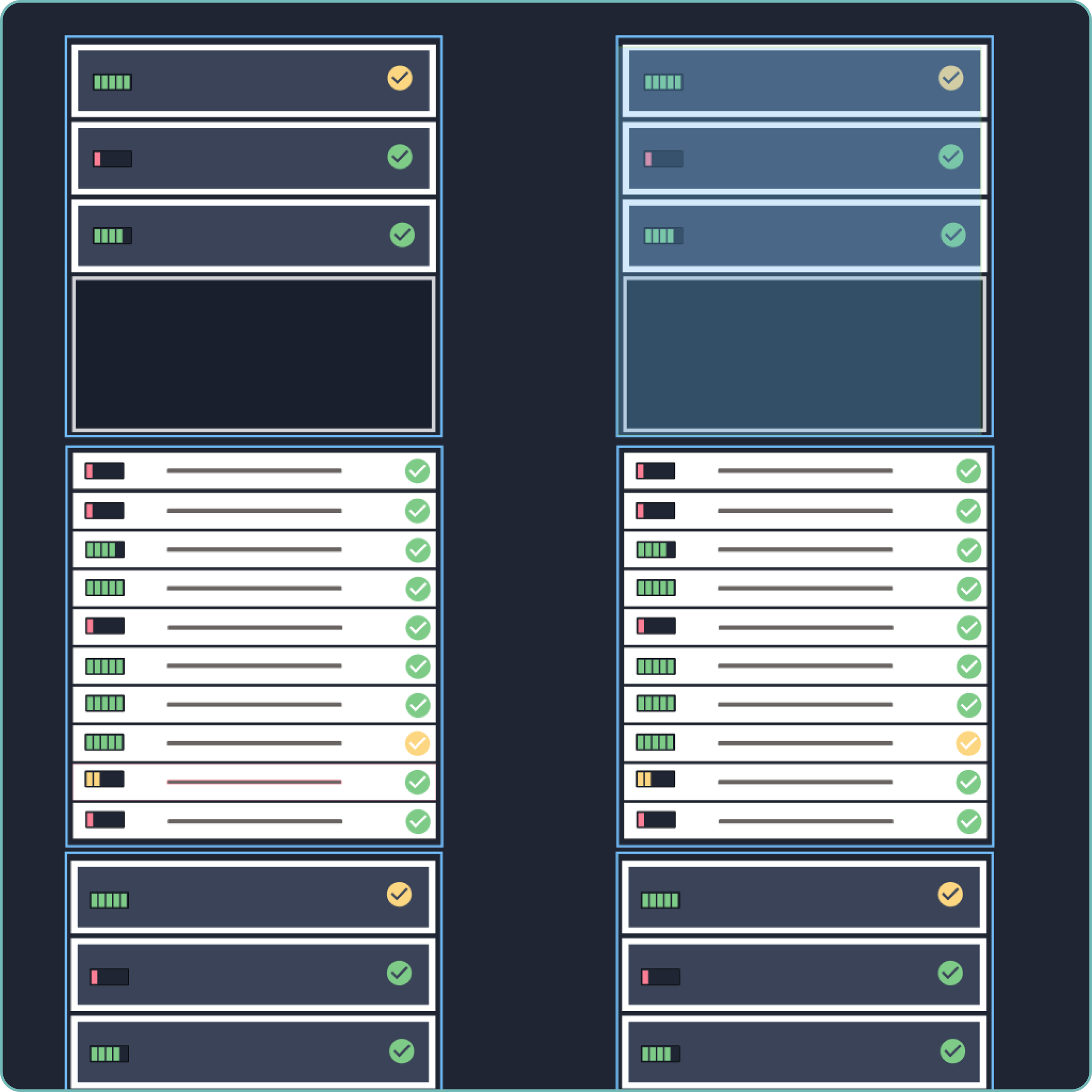
Landscape Models & Service Design
I started as a sole designer on the cloud platform, building out the team. However, after some internal reorganization, I inherited the analytics platform as well. My team and I needed to align across features, products and devices while supporting 22+ scrum teams.